Showing posts with label Emotional Maturity. Show all posts

Friday, September 18, 2020

Psyche & Soul 12 : Balancing Autonomy and Dependence

BIS Podcast link:

https://anchor.fm/boscom/episodes/2-12-Psyche--Soul---Balancing-Autonomy-and-Dependence-31-ejqolr

Hello, this is Jose Parappully, Salesian priest and clinical psychologist at Sumedha Centre for psychospiritual Wellbeing at Jeolikote, Uttarakhand with another edition of Psyche and Soul.


This weekend we shall look at one requisite for emotional wellbeing and success in life:  Balancing Autonomy and Dependence.

 Let me share two stories:

Anil is manager of a small manufacturing firm. There are about 30 employees who report directly to him and take orders from him. Most of them dislike him and many would prefer to work elsewhere if they had an option. The firm is doing pretty badly businesswise. Profits are down since the time Anil took over. One major reason is that Anil is a very “bossy” boss. He believes he knows what is best for the firm and makes all the decisions on his own and expects workers to follow strictly the strategy that he chalks out.

Sister Sushila is the newly appointed principal of a school run by a religious community. Soon after she reached her community, Sushila told Sr. Rose, the community leader. “Sister, I really need you to help me. I like you to tell me what I should do. You have so much experience.” Rose, an exceptionally non-controlling leader who wanted her members to take as much initiative as possible, told her. “It is good to ask my opinion if you really need to. I shall certainly help if needed.”

Very soon, Rose began to feel overburdened with Sushila’s frequent requests for advice and help. Sushila was reluctant to take even small decisions on her own, and needed constant reassurance from Rose. When teachers would come to her for some opinion or permission, Sushila would tell them, “I shall tell you later.” She needed to consult Rose.

Anil was excessively controlling, while Sushila was excessively dependent. Neither of them showed emotional maturity. Neither of them possessed the balance of autonomy and dependence, not having too much or too little of either, which is an important characteristics of an emotionally mature person.


Autonomy

According to psychologists Richard Ryan and Edward Deci who specialise in the study of human wellbeing and happiness, one of the three basic psychological needs we all have is the need for autonomy—the other two being relatedness and competence. Autonomy refers to the freedom we need to make choices, to have a say on matters that affect us; to give direction to our own life. Autonomy is the capacity to think and act independently. Autonomy enables us to take initiatives and do things own our own and in the way we want. It gives us a sense of control over our own lives.

Dependence

Dependence is reliance on others. When we are dependent we rely on the opinions and advice of others; we take their help. This dependence is also an important part of our daily lives.

We are social beings. We need each other. We cannot always get things done on our own. We need help of others. An emotionally mature person knows one’s limits, knows what one can do and not do, and when to ask for help and when to act independently.

Excess

But sometimes we become over dependent. We want help from others even when can manage on our own, but believing that we can’t do it by ourselves. This prevents us from taking initiatives. We look for assurance from others before we set out to do anything. We have an excessive dependence on others’ opinions and decisions even though there is no basis for believing that others are superior or wiser.

On the other hand some of us are over-autonomous. We act independently even in situations where we need to and are expected to consult others and work together with others. We act as we please without consideration for others’ opinions or needs. We avoid delegating tasks and responsibilities to others. We end up with lots of things to do. However, we prefer to exhaust ourselves rather than give up control.

This kind of over-autonomy leads to individualism – an egoistic tendency to act independently with little reference to others. Individualism has a very destructive impact on any group or community. Individualism evokes anger and resentment in other members of the group, vitiates the environment, lowers morale and commitment to task and leads to diminished group productivity.


Balance Rooted in Self-Confidence

To have balance between autonomy and dependence we need self-confidence. When we are confident, we have assurance about our standards and convictions without being a slave to the opinions of others. We engage in independent thought and action; we feel we have the right to have ideas, aspirations and wishes of our own. We have the confidence that we can get things done, that we can achieve things on our own.

When we have the right balance between autonomy and dependence, we are able to collaborate with others, as well as accept help from others. We give our opinions, express our wants without embarrassment or fear of rejection. We also know when collaboration may not be helpful and prefer to do things own our own.


Emotional Maturity

Ability to think for oneself, and make choices and decisions based on one’s own internal convictions characterise an emotionally mature person. At the same time such a person is also capable of depending on and collaborating with others as necessitated by situations.

Such emotionally mature persons are able to relate well to others and also to be effective professionally.

For Reflection

We could now spend a few months reflecting on how autonomy and dependence play out in our live. What experiences related to these come into awareness. Here are three questions for us to say with.

 ·         What has been my experiences in regard to autonomy and dependence?

 ·         Do I see myself as a person who has a helpful balance of autonomy and dependence? Why, why not? Do others see me that way? Why, why not?

 ·         What is it I need to do for a better balance of autonomy and dependence?


For Prayer

The greatest gift God has given us after life is freedom. God leaves us completely free to make whatever choices and decisions we want to make. However God has our welfare at heart and wishes that we use our freedom wisely. We could spend a few minutes talking to God about the way we have been using the gift of freedom and the way we would like to use it in future.

Have a pleasant weekend. Be healthy.  Be happy. May the choices you make enhance your wellbeing and happiness. 

Thank you for listening.

Pictures: courtesy Google Images

      Jose Parappully PhD

sumedhacentre@gmail.com


Friday, August 21, 2020

Psyche & Soul 8-NEED FULFILMENT AND EMOTIONAL MATURATION

 Podcast link:

https://anchor.fm/boscom/episodes/2-8-Psyche--Soul---NEED-FULFILLMENT-AND-EMOTIONAL-MATURATION-23-eievct

 Hello, this is Jose Parappully, Salesian priest and clinical psychologist at Sumedha centre, Jeolikote, with another edition of Psyche & Soul.

This weekend we shall look at some basic needs that have to be satisfied for us to experience emotional maturation and wellbeing.

We Are All Needy!

All of us – infants, children, adolescents and adults - are needy! Needy for food, needy for rest, needy for attention, needy for appreciation, needy for love … and so on.

When our need is fulfilled, we feel happy and we spread happiness around. Just think of an infant that has been breastfed – and the blissful face of satisfaction and contentment that results. And how that bliss becomes infectious, bringing happiness to the mother and the others around.

Our happiness depends, among other important contributors, to need fulfilment. A fundamental principle in psychology is that “All behaviour is need-driven!” In other words, we behave in a particular way - whether that behaviour is good, bad, beautiful or ugly - because we have a need that we want to satisfy.

The various theories of development that we have explored in the previous columns – Eriksonian, Self Psychology, and Attachment -- describe the healthy ways to fulfil these needs and what happens when we are able or not able to fulfil them.


Basic Emotional Needs

Many of us would be familiar with Abraham Maslow’s Hierarchy of Human Needs – represented by the famous triangle, at the wide base of which is survival needs for food, shelter and clothing and at the narrow top the self-actualization needs. Maslow refers to all human needs.

In this podcast we shall focus only on our emotional or psychological needs. Psychologists have been trying to short list the basic psychological needs. One such short list is the one proposed by Richard Ryan and Edward Deci, who formulated what is known as “Self-Determination Theory.”

According the Ryan and Deci there are three basic emotional needs. When these are satisfied we grow up healthy, are driven by intrinsic motivation, and experience a sense of well-being. When these are not realized our emotional development is stunted, motivation diminished and our happiness compromised. 


Which are these basic emotional needs?

1) Relatednessthe need for belongingness and connectedness, to feel accepted and loved; 2) Competence: the need to have a sense of self-efficacy, to feel that we are capable achieving desired results, to feel confident that we can be successful and effective in what we set out to do; and 3) Autonomy: the freedom to give direction to our lives, to make choices or have a say on matters that affect our lives. These basic needs must be satisfied, not only in childhood, but across the life span for us to experience an ongoing sense well-being


Basic Needs and Intrinsic Motivation

One major dynamics that we need to keep in mind in understanding emotional maturation is motivation. Success in life as well as satisfaction in life is built on what is called intrinsic motivation which refers to doing an activity for the inherent satisfaction of the activity itself, that is, when we are motivated by the value of an activity or by an abiding personal interest in it. On the other hand, extrinsic motivation is at work when an activity is undertaken to attain some expected or promised external rewards contingent on compliance or task performance.

Thus, in the school setting, intrinsic motivation is involved when one studies because one is really interested in the subject. Extrinsic motivation is involved when one studies because of the benefits it may bring.


The basic needs of relatedness, competence and autonomy are all involved in fostering intrinsic motivation.

A secure, supportive relational base is essential for developing intrinsic motivation For example, when children engaged in a task are ignored by their caretakers (when there is no mirroring) they are observed to have low intrinsic motivation and their achievement level is lowered. When students experience their teachers as cold and uncaring, intrinsic motivation is reduced. Thus, high quality performance seems to require the presence of appreciative and encouraging mirroring figures.

Opportunities for choice, initiative, creativity and experimentation, so very necessary to build competence, also enhance intrinsic motivation because these provide us a greater feeling of autonomy. Thus, when, both children and adults are given freedom to organize their activities the way they would like to, they are more intrinsically motivated and show greater interest and creativity.

Research has shown that teachers who support autonomy generate in their students greater intrinsic motivation, curiosity, and desire to face and overcome challenges. On the contrary, students who are taught with a more controlling approach not only lose initiative, but learn less effectively. Parents who support autonomy, compared to controlling parents, have children who are more intrinsically motivated.


In regard to adults, autonomy basically means the capacity to make one’s own decisions without undue pressure or fear. It supposes a setting where thinking and personal responsibility are not stifled or just tolerated, but encouraged.

A Facilitative Environment

An important point to note here is that what matters more than someone helping us to meet these basic needs is whether the environment in which we find ourselves is one that facilitates or thwarts the fulfilment of these needs. An environment that encourages relatedness, competence and autonomy facilitates healthy emotional development. On the other hand, an environment characterized by lack of connectedness, excessive control, non-optimal challenges, disrupt our inherent growth potentials, curb our initiative and lead to distress and psychopathology.


So if we are to grow emotionally healthy as well achieve our potential for growth and high quality performance we need environments that foster the fulfillment of these basic emotional needs. And if we want others to experience the same, we need to create from them such an environment.

Quiet Time

We could take a few moments to consider if our needs for relatedness, autonomy and competence are being met or not. We could also consider how we are helping those around us to meet these needs.

…..

We know that our God is very interested in our emotional wellbeing, our health and happiness. God wants jus to experience relatedness, become competent. God respects our freedom to make choices by giving us free will. God wants us to make choices that lead to health and happiness. But God does not force us.

We could stay for a while with the memories and feelings this reflection is evoking is us and talk to this God about our experiences and desires and longings related to these basic emotional needs for relatedness, competence and autonomy.

Have a pleasant weekend where you experience enhanced relatedness, competence and autonomy. Be well, be safe, be blessed.


Sunday, August 21, 2016

YOUNG SALESIAN PRIESTS AT SUMEDHA CENTRE

Twenty six young Salesian priests (ordained within the last 10 years) of the Province of the Good Shepherd, New Delhi attended a four-day programme (August 18-21, 2016) on renewal of priestly life and ministry at Sumedha Centre.


The programme was organized by Fr. Naresh Kujur, the Vice provincial of the Salesian Province of New Delhi.

It was facilitated by Johny Dominic PhD, the Assistant Director of Sumedha Centre and Jose Parappully, the Director.


On the first two days Johny Dominic dealt with “Emotional Maturity.” He helped the young priests to look at their emotional reactions and suggested ways to handle their emotional life in more helpful and effective ways.

Jose Parappully facilitated the last two days. He explored with the young priests "Psycho-Sexual and Celibate Integration." He helped them to look at what is going in their lives in this area and explored with them some of the problematic issues related to the topic and helped them discover ways to address these issues in keeping with their status as men vowed the celibate chastity.


The young priests had opportunities to share win dyads or small groups about their experiences.
These explorations were enriched with creative liturgies in which they were able to celebrate  their joys and challenges in this area.

During the programme Fr. Jose Mathew, the Provincial of New Delhi and Fr. K. C. John, the Economer of the Province, visited the group.


In the afternoon of the last day, the group went on sightseeing tour to Nainital.


The young priests said they found the entire programme very enriching.  The topics were dealt with very competently and openly. They suggested such programme should be organized also for the senior priests of the Province.


Saturday, June 16, 2012

SUMEDHA REACH OUT: TEACHERS’ WORKSHOP AT SOUTH CITY INTERNATIONAL SCHOOL, KOLKOTA


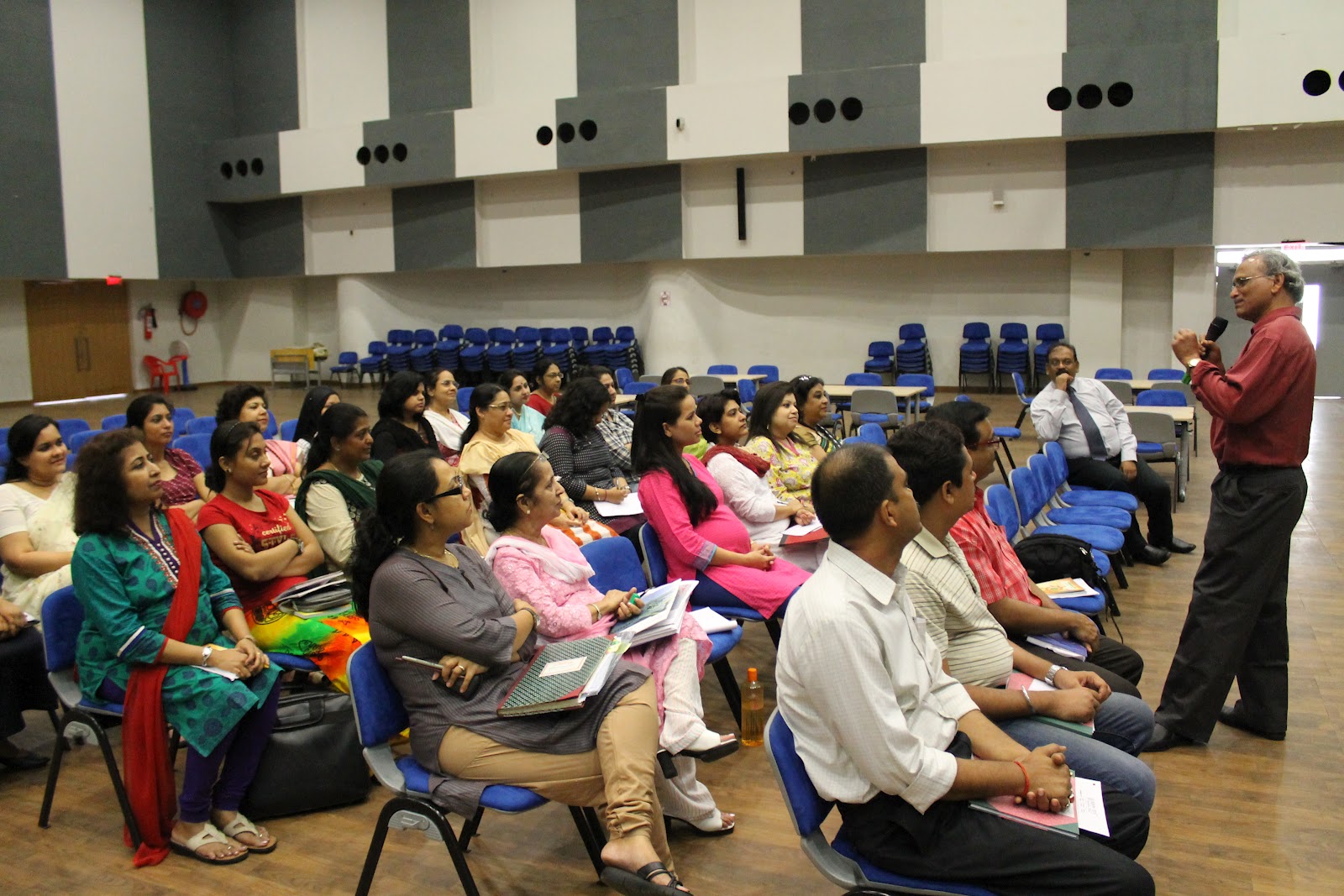
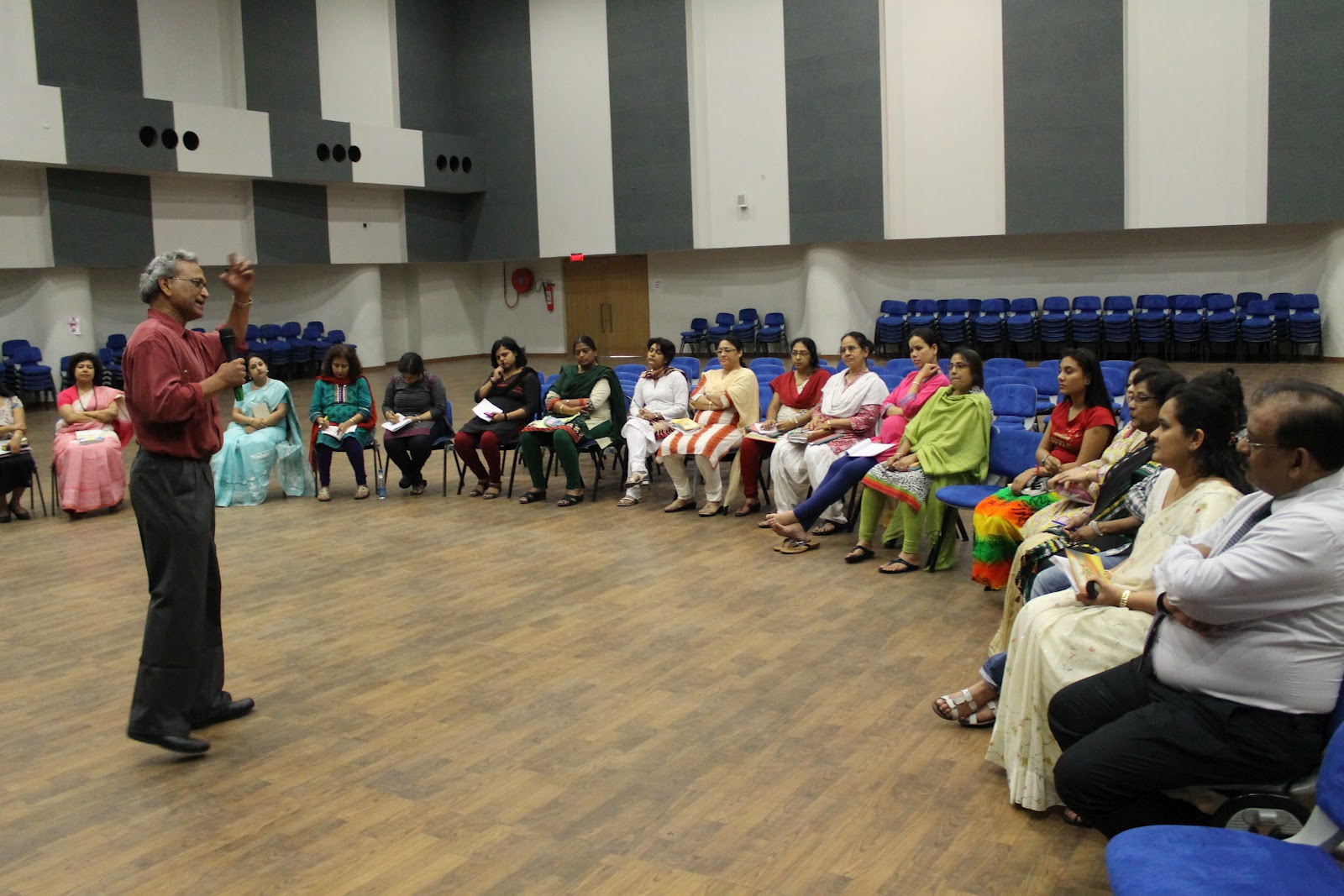
Dr. Jose Parappully, the Director of Sumedha Centre, was invited to facilitate a Workshop for the High School teachers of South City International School in Kolkata on 14-15 June.

The school building is impressive and its infrastructure and facilities state-of-the-art with central air-conditioning. The school is only 4 years old and has had a very impressive growth. Starting with about 100 students in the first year, today the school has more than 1000 students and about 70 teachers. The high school section has 35 teachers, many of them with prior experience in other schools.

Dr. Parappully organised the Workshop on the first day around the theme “Enhancing Institutional Excellence.” He used structured exercises, videos and latest insights from organisational psychology to present the crucial ingredients that contribute to institutional excellence and helped the teachers to assess the dynamics at South City International that contribute to or stand in the way of institutional excellence.

The explorations on the second day centred around the person and functions of the teacher and focused on the theme of “The Emotionally Sensitive Teacher.” Starting with Howard Gardner’s theory of Multiple Intelligence, the Workshop used the concepts of basic emotional needs from Self Determination Theory, and of Mirroring and Idealising from Self Psychology to help the teachers look at the level of their emotional sensitivity and provided tools and approaches to enhance it.

The teachers were extremely satisfied with the Workshop. A number of them said this was “the best of all the workshops” they ever had.  It had helped them to “enhance cohesion” among themselves, “open up communication channels” and create “greater connectedness and trust” and “be more aware of and sensitive to the emotional needs” of students and colleagues.

“The workshop has touched us not only professionally but also personally. Its effect goes much beyond our life in the school.” This was another common sentiment expressed by the teachers as they reflected on their experience of the workshop.