Showing posts with label integrity. Show all posts

Sunday, July 18, 2021

Psyche & Soul 55: Midlife XII-- ATONEMENT (AT-ONE-MENT)

 Podcast link:

https://anchor.fm/boscom/episodes/2-55-Psyche--Soul--117-e14h1df

Hello, this is Jose Parappully, Salesian priest and clinical psychologist at Sumedha Centre for Psychospiritual Wellbeing at Jeolikote, Uttarakhand with another edition of Psyche & Soul.

In this edition, I present another midlife challenge: atonement.

Integrity that we explored and reflected upon in the previous podcast calls for atonement, understood as at-one-ment, becoming one, becoming whole.

 An essential challenge here is to work through and heal from the painful feelings and experiences we have carried with us into midlife.

 At-one-ment involves reconciliation - making peace with self, with others and may be also God, something that most of us find a real challenge.

 Reconciliation

To experience atonement, we must come to terms first of all with guilt over our own wrong doings. We need to forgive ourselves for our foolish choices and decisions, for messing up our lives, and turning a deaf ear to the deepest longings of our soul.

We need to let go our grievances against others for the real or imagined damage they have done to us. We need to forgive and reconcile with people who we feel put us on the wrong track or stood in the way of fulfilment of our dreams.

In the pursuit of our ambitions and misplaced priorities we might have been unfaithful to our promises to others, to husbands and wives or to God as religious men and women. We are challenged to right these wrongs, forgive ourselves and others, as well as ask forgiveness. We are called to reconcile, to reach out to others and end our alienation.

Reconciliation is a challenge for most of us. Some of us are able to achieve it, some of us do not. Some of us do not want to reconcile, preferring to carry our hurt, anger and resentment, seeing our stubbornness and pride as badges of strength.

Antony and Rajan were very close friends who set up a business together. The business thrived for a few years. Then profits declined, the ledger was showing big losses. After a careful internal auditing it was discovered that Rajan had been siphoning off money on various spurious accounts. Antony was very angry and upset. He angrily confronted Rajan and resigned from the company and decided not to have anything to do with Rajan or his family. This situation went on for a quite a few years. During a spiritual retreat Antony had a conversion experience. The words of the preacher on forgiveness touched him deeply. Though painful, Antony decided to forgive Rajan and reconcile with him.

Sr. Prabha had been the principal of a higher secondary school for several years. She had worked hard to bring the school to a standard of excellence and everyone was very happy with her. Ten years after she had taken over, her Provincial wanted to give her a transfer. Her considerable talents were needed elsewhere. Prabha talked the Provincial out of it.  Another three years passed. There was now a new Provincial who also decided to transfer Prabha, who tried to talk her too out of it. She shared with the new Provincial all the plans she had to take the school to still  greater heights, and that there were a number of works she had initiated that needed her attention. However, the Provincial stuck to her decision. Prabha obeyed and took up her new assignment, angry and resentful. She also stopped talking to her Provincial, and continues to avoid her even now when that Provincial has finished her term of office.

Antony realized the futility of holding on to his anger and was able to let go and make peace. Prabha was unable. She is still holding on to her hurt and resentment which keeps her fragmented, splintered within herself, alienated from others. No reconciliation, no atonement, no integrity.

Acceptance

Atonement is manifest also in the greater acceptance of the paradoxes of life, between good and evil, failure and success; in the giving up of our rigid and unbending opinions, and greater openness to contrary views; in becoming more sober and less impulsive in our judgments and our behaviour; in the willingness to acknowledge and accept more easily that we have been wrong on many matters and in many situations.  

 Atonement is manifest in the capacity to accept and tolerate ambivalence, conflict and failure. We no longer have the compulsion to be always perfect. We become more accepting of our limitations as well as appreciating our strengths and our accomplishments.

Inclusiveness

Atonement also calls for becoming more ‘catholic’- more universal, more inclusive, making space for everything and everyone in our heart, learning to cross narrow boundaries. We exclude nothing and no one, rather we embrace and include all, breaking down walls, broadening our perspectives and expanding our horizons.

 This acceptance and inclusion apply also to parts of our own selves and our personal history that we have despised or rejected.

Mourning

Atonement calls for mourning. Mourning is grief over unrealized dreams and lost opportunities, foolish decisions and roads not taken. It is coming to terms with our mistakes, failures and disappointments, letting go and moving on.

In authentic mourning, we process the past and discover who we are as a result of our experiences. We realise we cannot undo past events or the foolish choices and decisions we made, or the wrongs that others have done to us. We accept them and their consequences for us, who we have become as a result, and move on with life.

 We have to mourn those aspects of our personality we were unable to develop because of past choices or circumstances. We have to deal with the disparity between who we are and who we had dreamed of becoming— that is, mourn the person we have not, and now may never become.

 Shanti was brilliant in school. She had dreamed of becoming a doctor. But when she completed her school finals, she felt a call to become a religious. She felt she could fulfil both her dreams – be a religious nun, as well as a doctor. She became a nun; but her dream of becoming a doctor was never realized. After taking her religious vows, her superiors wanted her to be in education. She was deeply disappointed. But she obeyed, though with some initial resentment. She qualified in the educational field, obtaining a PhD, the only one in her congregation to do so. She has accomplished much as a well-recognized and appreciated educator. She still feels a tinge of sadness when she recalls her unfulfilled dream, but she is also grateful when she recalls how many lives she has touched as an educator.


Mourning is not regret. In regret we remain tied to a non-existent past, revelling in the “If only…” wishing things were different. Historical events cannot be wished away. All our wishing to the contrary will not make an iota of difference to the fact that something happened, however unfortunate it was.  But we can change our attitudes toward what happened. We can accept what has happened as part of our history, as something about which we today can do nothing and move on with our lives focusing on the present and the future. This is mourning. This is what Shanti did.

The Challenge of Atonement

As psychologist Daniel Levinson observes, failure to undertake this challenge of atonement can move us into late adulthood, bitter and resentful about perceived or real injuries, as “angry Martyrs,” our energy sapped by rage and self-righteous indignation. On the other, when we experience atonement we move toward the sunset of our lives enjoying peace and serenity.

I conclude with William Kraft’s description of the challenge of atonement: “…middle agers are challenged to reflect on life and to bring integrity into their relationships with themselves, others, and the world. Out of guilt, they come to forgive themselves and others. Out of depression, they come to a deeper fulfilment. Out of limits, they come to experience the unlimited. Out of resentment, they affirm their dignity and learn to be compassionate and forgiving. Out of anger, they become gentle and touching. This is the age of atonement, the time to become one with self and others. (Spiritual Growth in Adolescence and Adulthood, 1983, p. 21).

Reflection Exercise

·         What aspects of Atonement described here have you engaged in? Which do you still need to engage in? Which of them do you find difficult to engage in? Why?

Prayer

The story of Joseph and his brothers in the Old Testament (Genesis Chapter 42-45) is classic case of atonement – forgiveness and reconciliation and moving on.

The young Joseph is sold into slavery by his jealous brothers. Later Joseph becomes the premier of Egypt and when a famine ravages their land his brothers are forced to go to Egypt and beg for grains from Joseph who recognised them. He is able to let go of the cruel injustice they had inflicted on him and treat them with love and affection and given them the grain needed. Not only, he invited them and their father to stay with him in Egypt.

What does this story evoke in us?  We could spend a few moments with our God, talking to God about our challenges related to atonement and seek his help to do the needful, so that we can move into the second half of   life less burdened by resentments and anger, and in serenity and peace.

 Have a blessed, safe and healthy weekend.

Thank you for listening/reading.

Pictures: Courtesy google Images

 Jose Parappully SDB, PhD

sumedhacentre@gmail.com


Sunday, July 11, 2021

Psyche & Soul 54 MIDLIFE –XI: MOVING TOWARD INTEGRITY

 Podcast link:

https://anchor.fm/boscom/episodes/2-54-Psyche--Soul--115-e145dc1

Hello, this is Jose Parappully, Salesian priest and clinical psychologist at Sumedha Centre for Psychospiritual Wellbeing at Jeolikote, Uttarakhand with another edition of Psyche & Soul.

 In this edition, I present another midlife challenge: achieving integrity--that is ability look back over one’s life without regrets and look forward to death without fear.

 Sr. Felicia is in her late 80’s. She is physically frail and bedridden because of a debilitating illness. But her mind is sharp as it was in her twenties when she first came to India as a young missionary. She radiates joy and enjoys telling stories to her visitors – stories of her experiences. “When I first came to India…” she would begin and go on a narrative of her missionary adventures. She would often repeat the same story. Those who have heard her many times, would tell her. “Sister, we have heard that one before. Tell us another.” She would then say, “This I think I have not told you.” And then start something different, but invariably after a while her narrative would go back to the oft repeated stories.

What Sr. Felicia is doing is reminiscing and integrating. In retelling her experiences she brings the bits and pieces of her long life into perspective and endows them with meaning.

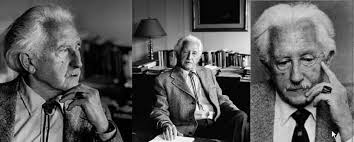
In Erikson’s eight-stage developmental scheme, the crucial task of the eighth and last stage is achievement of integrity. The word, as Erikson uses it, does not refer to honesty or authenticity, but to wholeness, in the way The Oxford English Dictionary defines it:  “Wholeness, entireness, completeness... the condition of having no part or element taken away or wanting.”

Integrity consists in seeing one’s life in its entirety as meaningful and worthwhile. It is the result of synthesising a life time of experiences, both good and bad, in a way that enables one “to look back over life without regrets and to look forward to death without fear.” Such a stance calls for much soul-searching for the meaning of our life and working through and coming to terms with life’s inevitable disappointments and tragedies, as well as being thankful for its blessings.


Reminiscence

The central process that leads to integrity is reminiscence, the repeated nostalgic contemplation and retelling of our life stories. As our life experiences are remembered and retold again and again, a synthesis and integration occurs. The scattered pieces of the puzzle that is our life begins to fall into shape. We begin to see our life in its entirety and accept everything, finding meaning and purpose even in what was considered senseless or tragic.

 Often during reminiscence memories of unresolved issues come into awareness with an invitation to reconcile with them.

 Another important aspect of this reminiscence is the evaluation of our contributions to improve the quality of life for others.

Psychologist Robert Butler describes what happens in the reminiscence:

As the past marches in review, it is surveyed, observed, and reflected upon by the ego. Reconsideration of previous experiences and their meanings occurs, often with concomitant revised or expanded understanding. Such reorganization of past experience may provide a more valid picture, giving new and significant meaning to one’s life; it may also prepare one for death, mitigating one’s fears. (The Life Review, pp. 489-490)

Altruism and Generativity

Those who have been generative, through contributions to culture and society, rather than focused on personal aggrandisement and ego gratification in their earlier years, are the ones who find it easier to move toward integrity. Through these generative and altruistic activities they are able, in psychologist Robert Peck’s words, to “achieve enduring significance” and so be in a better frame of mind to accept the impending end. The efforts made to make life more secure, more meaningful, or happier for the people who will go on after one dies is one of the most important dynamics that enables one to look back without regrets and forward without fear.

 Relationships

The close relationships one has enjoyed also provide for a sense of subjective-wellbeing and satisfaction, and thereby enhances the path toward integrity. This is all the more true if the close relationships are still maintained.

 Maintenance of close, satisfying relationships serves as buffer against the depression and low morale that can ensue from the social deprivations and the physical challenges (deterioration of certain physical capacities, particularly the loss of hearing, impaired vision, and limited motor agility,) that are part and parcel of old age

Despair

The opposite of integrity is despair – the feeling that one’s life was worthless or meaningless, that one had failed to make any contribution to the future of society and wellbeing of others and that it is now too late to make a difference.

This happens especially to those who have lived a very self-centred and selfish life with little regard for the welfare of others. They would now want to make some changes, but there is no time; it is too late. As Erikson observed “Despair expresses the feeling that the time is now short, too short for the attempt to start another life and to try out alternate roads to integrity” (Childhood and Society, p. 269)

According to Robert Butler among those for whom the life review is likely to lead to feeling of despair are those who tended to focus on the future rather than on the present. These had invested heavily in the future, hoping for a rich harvest. But that future never arrived, leading to disillusionment with self and life itself.

Another group that is bound to despair consists of those who deliberately went about injuring others. They are plagued by guilt, but cannot imagine forgiveness and redemption.

Still another group consists of those who have been “characterologically arrogant and prideful,” prone to indulge in “narcissistic self-promotion and derisive dismissal of others” (The Life Review, p. 491).

Unable to accept as ultimate the life cycle drawing to a close, the despairing individual approaches death with fear and disappointment. Evaluating his or her life and accomplishments, the despairing individual feels that life, instead of being a meaningful adventure, has been wasted. The result is bitterness and resentment. The individual wants to achieve something meaningful, but recognise the futility of trying, because there is no time left and death is inevitable and near. Despair arises from this sense of waste and futility: ‘If only I could have…”

 This haunting sense of despair is poignantly illustrated in the life of Warren Schmidt, the lead character in the film About Schmidt. Schmidt (played by Jack Nicholson) had devoted himself totally to advancing his career, neglected his family and had little social connections. After retirement his life goes into downward spiral. His wife dies; his attempt to re-connect with his alienated only daughter is rebuffed. He finds himself totally alone, wanting to connect but not knowing how. He sets off on a long journey in his RV (motor home) alone, revisiting his past, and as he makes an evaluation of his life on that solitary journey, he reaches a sad conclusion: “My life has been a failure. What difference have I made to anyone’s life?” Fortunately, salvation came in the little connectedness he experienced with Ndugu, a six-year old orphan boy in faraway Tanzania whom he had sponsored after retirement. The picture the boy sends him connecting himself with Schmidt with a string moved Schmidt to tears – tears of joy as well as regret, expressing a gamut of emotions. The movie ends with that poignant picture of Schmidt’s face in close-up.


What all this tells us is that how we live the first half of our life matters in terms of a happy ending. Among the things that contributes most to a happy conclusion are close relationships one has cultivated, and the contributions one has made to the wellbeing of others. As psychologist George Vaillant summed up the conclusions of the longest running study of human development, “Happiness is love. Full stop.” Vaillant’s conclusions were corroborated by Robert Waldinger, the current Director of the study: “The good Life – Health and Happiness – is built on good relationships. Period.”

A midlife review in terms of how the above dynamics feature in our lives gives us still time, before it is too late, to make some changes in our lifestyle and priorities so that our end of life reminiscences lead to a sense of satisfaction– to feeling “this has been a good life” rather than to a sense of despair, “what a waste!”

 For introspection:

·         As you look back over your life, how do you feel about it?

·         What is the invitation you hear as to the changes you may need to make to achieve integrity - seeing your life as meaningful and worthwhile, “to look back over life without regrets and to look forward to death without fear.”?

 Prayer

The mystic Hildegaard of Bingen writes: “The greatest problem lies in trying to integrate everything, to invest all with meaning, see it all as part of a larger, more meaningful life.”    


We can ask God’s help and guidance to achieve this integrity, this meaningfulness. Our God who is very much interested in our wellbeing, our health and happiness is with us in the here and now, as God has been present in all hat has been happening in our life. Take a few minutes to tell God how we feel about our life at the moment, and ask for inspiration to make it more meaningful and satisfying.

 Have a pleasant weekend. Be safe. Be blessed.

Thank you for listening/reading.

Pictures: Courtesy google Images

Jose Parappully SDB, PhD

sumedhacentre@gmail.com


Friday, August 2, 2013

August Highlight at Sumedha Centre: MIDLIFE DYNAMICS AND THE SPIRITUAL JOURNEY

Midlife Dynamics and the Spiritual Journey is the select programme at Sumedha Centre in August. It will be held from August 12 to 31 and will be facilitated by the Director of the Centre, Jose Parappully.

A Description of the Programme Content and Process

Midlife is a time of profound shifts and changes – in body, mind, perspectives, priorities, values, goals, relationships, spirituality… It is a time when we re-think and re-evaluate our commitments and life choices.

The heart of the programme is built around the midlife dynamics of identity (who we are), intimacy (the role of affectivity and sexuality in our lives) generativity (how we work and nurture future generations), and integrity (how we make sense of the whole of our life).

We begin our midlife explorations from where we are, looking at what is happening in our lives at this point on our psycho-spiritual journey. We try to discern what God might be telling us through all that is happening in our lives. We will explore these current realities in the context of changing paradigms. We explore and assess our spirituality and our religious life in the context of shifting midlife perspectives.


At midlife, sexuality, which has often been repressed, rears its head and makes itself felt, often in troubling ways. Longing for a close relationship is awakened or intensifies. Our body experiences drastic hormonal changes. All these affect our self-concept and our spiritual journey. Our attitude toward sexuality is sometimes profoundly affected by negative sexual experiences, including abuse. We shall address these issues by exploring sexuality and affectivity and their healthy integration in our celibate lifestyle and ministry. We will explore particularly the nature and challenge of celibate friendship as also the effect of sexual abuse and ways to heal from its effects. Spirituality of the body will be explored in the context both of sexuality and of generativity.

We conclude our midlife journey by evaluating and integrating our Life Story through reminiscence and planning to live out the rest of our Life Story informed by the new perspectives and intimations generated during this workshop.


Insights from various psychological theories of development, as well as tools and techniques from the Intensive Journal, Psychosynthesis and Expressive Arts, prayer and meditation are used to explore these midlife dynamics.


This workshop provides theoretical input as well as opportunities for us to reflect on our experiences and to share them with one another and for personal and common prayer. It is hoped that through this four-fold dynamics of Input, Introspection, Interaction, and Prayer we gain a deeper feel for the psychological dynamics operating on our spiritual journey and integrate these to develop a healthier self so that we can experience greater serenity and wholeness as we continue our journey into the Mystery that is our Triune God.